

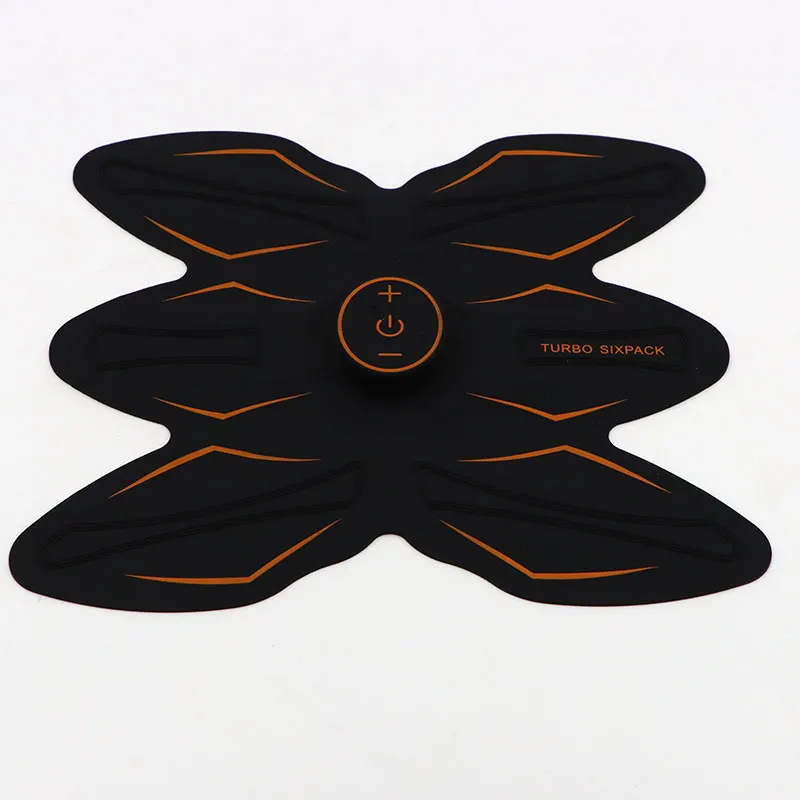

EMS Silicone Abdominal Muscle Patch
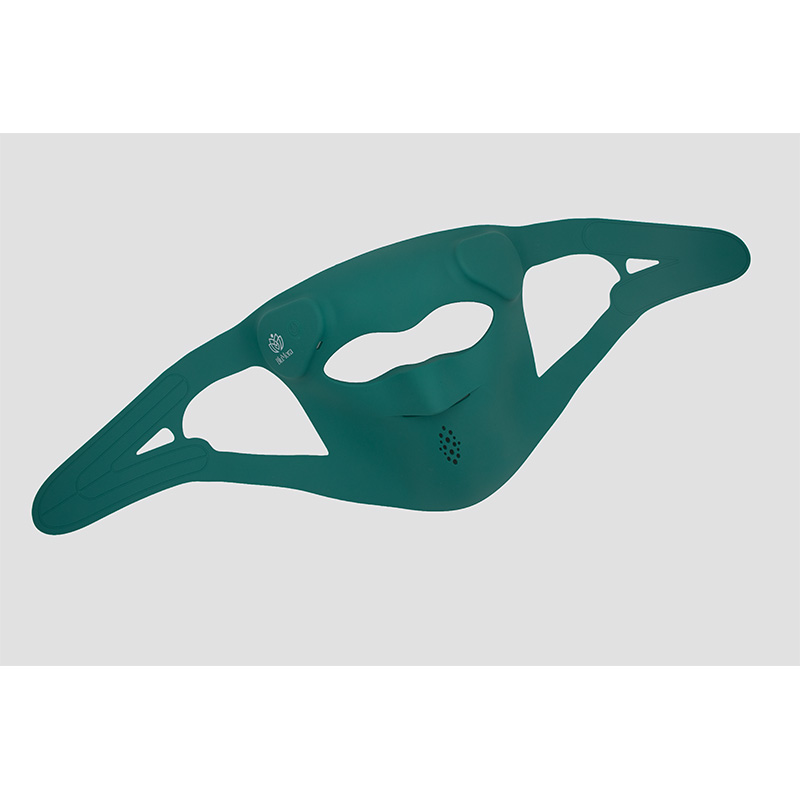
Aobo Silicone develops and manufactures EMS silicone abdominal muscle patch components for fitness device brands, wearable electronics companies, and OEM/ODM customers. Using liquid silicone rubber (LSR) molding and precision overmolding technologies, we help integrate flexible silicone structures with electrodes, conductive components, housings, and fastening features for repeatable production.
An EMS silicone abdominal muscle patch must do more than simply hold an electrode against the skin. For procurement teams, the real challenge is achieving stable skin contact, reliable electrical conductivity, comfortable flexibility, secure component integration, and consistent mass production at the same time. Poor material selection or uncontrolled molding can lead to uneven contact pressure, electrode displacement, silicone tearing, poor bonding, or inconsistent appearance between production batches.
Why LSR Is Suitable for EMS Silicone Patch Applications
For wearable EMS products, silicone needs to remain flexible while maintaining dimensional stability during repeated bending, stretching, and daily use. Conventional compression-molded silicone can be suitable for simple shapes, but complex wearable structures often require tighter control over wall thickness, geometry, bonding interfaces, and automated production.
Liquid silicone rubber offers several engineering advantages for this type of application.
First, LSR has excellent flow characteristics, allowing the material to fill relatively complex cavities and fine structural areas with high repeatability. This is useful when the patch incorporates positioning ribs, electrode openings, snap-fit interfaces, thin flexible sections, or integrated cable protection.
Second, LSR can be molded into soft-touch surfaces suitable for prolonged skin contact. Depending on the formulation, hardness can be selected to balance flexibility, support, and deformation resistance.
Third, LSR overmolding can reduce the number of separate parts in a wearable assembly. Instead of using multiple mechanical fasteners or adhesive layers, silicone can be molded around selected components to create an integrated protective and functional structure.
For brands developing private-label EMS fitness devices, this approach can simplify assembly and improve overall product consistency.
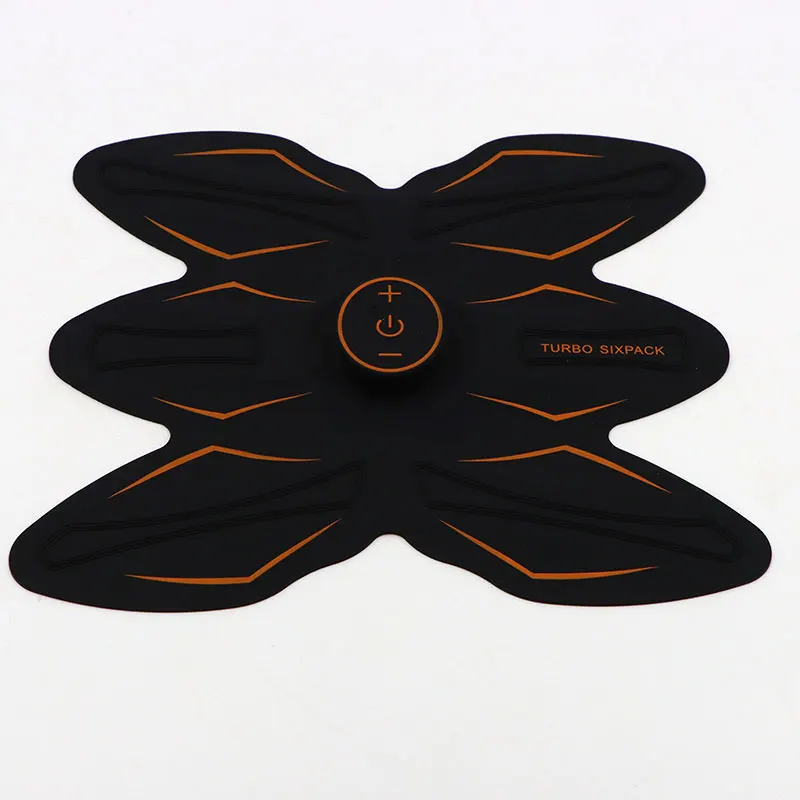
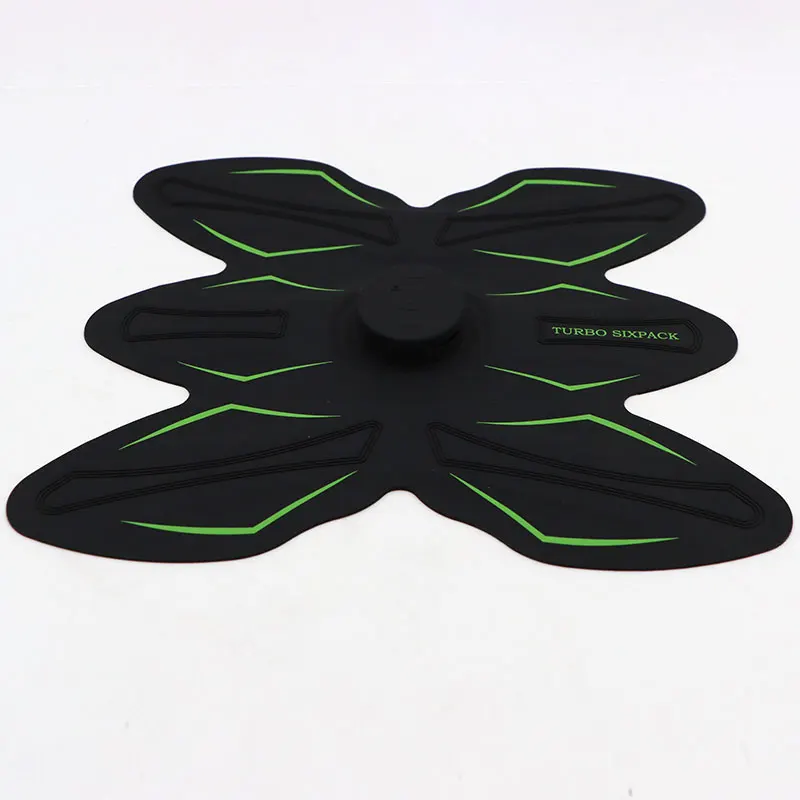
Material Performance and Engineering Value
The silicone formulation is one of the most important variables in EMS wearable development. The correct compound should be selected according to the intended skin-contact environment, mechanical requirements, device architecture, and target market.
Typical silicone characteristics relevant to this application include:
● Flexible and elastic structure for repeated body movement
● Comfortable soft-touch surface
● Good resistance to moisture and perspiration
● Good resistance to common environmental conditions
● Stable performance over repeated bending
● Good dimensional consistency after molding
● Low deformation under normal use conditions
● Suitable compatibility with electronic assembly processes when properly specified
For skin-contact components, material selection should also consider the applicable regulatory and testing requirements of the destination market. Depending on the product configuration and intended claims, brands may require testing related to restricted substances, skin-contact compatibility, or other product-specific requirements.
Aobo Silicone can support customers in selecting an appropriate silicone grade, hardness, color, surface finish, and production process based on the final application.
Typical Applications
The EMS silicone abdominal muscle patch can be designed for a range of consumer wearable fitness products rather than a single fixed device structure.
Typical applications include:
EMS Fitness Belts and Abdominal Trainers
The silicone structure can be integrated with electrode areas, control modules, connectors, and adjustable fastening systems to create a flexible abdominal training interface.
Portable Muscle Stimulation Devices
Compact silicone patches can be designed around lightweight electronic modules for portable wellness and fitness products.
Smart Fitness Wearables
For products combining EMS with sensors, Bluetooth connectivity, charging modules, or digital control systems, silicone can serve as both a protective interface and a flexible exterior component.
Private-Label Consumer Electronics
Brand owners may require customized dimensions, colors, logos, textures, and packaging while keeping the underlying functional structure consistent. Silicone molding is well suited to these OEM/ODM programs.
Design and Customization Considerations
The design of an EMS silicone component should begin with the complete assembly rather than the silicone part alone.
Hardness Selection
Silicone hardness affects comfort, flexibility, deformation resistance, and handling. Softer materials can improve flexibility and skin conformity, while higher hardness may provide additional structural support.
The recommended hardness should therefore be determined according to the patch geometry, fastening method, electrode design, and expected use conditions.
Electrode Integration
Electrode position and exposure are critical design considerations. The silicone mold should maintain accurate electrode alignment while preventing unwanted movement during assembly or use.
Depending on the architecture, Aobo Silicone can support silicone molding around or adjacent to conductive components, with the final configuration determined by the electronic design.
Thickness and Flexible Zones
Uneven silicone thickness may influence flexibility and molding performance. Areas that repeatedly bend should be designed with appropriate transitions to reduce stress concentration.
Thin sections, edge transitions, locating features, and reinforced connection zones should all be reviewed during mold design.
Surface Finish
The outer surface can be customized with different textures, gloss levels, matte finishes, embossed patterns, or branding features. Surface treatment should be selected according to both appearance and cleaning requirements.
Branding
OEM customers can specify:
● Logo embossing or debossing
● Custom colors
● Surface textures
● Part numbering
● Packaging configuration
● Customized dimensions
● Molded branding structures
Pantone color matching can be supported for projects with established brand guidelines.
Manufacturing Process
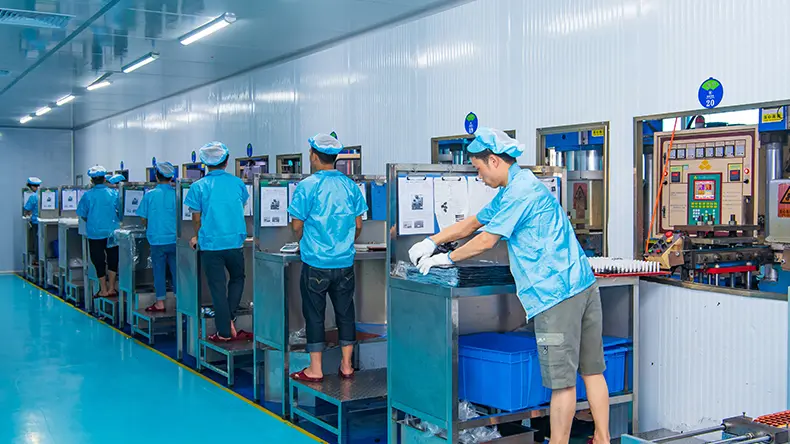
Aobo Silicone uses a structured manufacturing workflow for customized silicone components.
1. Drawing and DFM Review
Before tooling, engineers review the customer's 2D drawings, 3D models, assembly requirements, electrode positioning, wall thickness, draft conditions, and critical dimensions.
The objective is to identify potential molding and assembly problems before mold fabrication.
2. Silicone Material Preparation
The specified LSR material is prepared according to the customer's performance and compliance requirements. Material characteristics such as hardness, color, and curing system are controlled during production.
3. Precision Mold Development
The mold is designed according to the final part geometry and production volume. Gate position, venting, parting lines, inserts, and demolding conditions are considered during development.
4. LSR Injection Molding
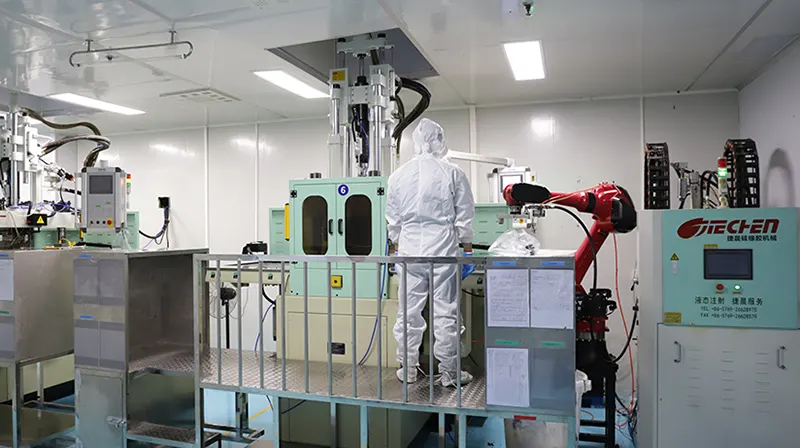
Liquid silicone is injected into the mold under controlled processing conditions. Compared with manually assembled silicone components, automated LSR molding provides more repeatable geometry and production consistency.
5. Overmolding and Component Integration
Where required, silicone can be molded around designated inserts or integrated structures. The exact overmolding method depends on the electrical components, substrate materials, and mechanical design.
6. Trimming and Finishing
After molding, parts are inspected and finished to remove unwanted flash or molding residues. Cosmetic surfaces are checked for defects that could affect the final wearable product.
7. Inspection and Packaging
Finished components undergo dimensional and visual inspections before packaging. Customized packaging and identification can also be provided for OEM customers.
Key Technical Parameters
The following parameters can be used as a preliminary reference for EMS silicone components. Final specifications should be confirmed according to the product design and testing requirements.
|
Parameter |
Typical Specification |
|
Material |
Liquid Silicone Rubber (LSR) |
|
Silicone Hardness |
Shore A 20–80 |
|
Color |
Custom / Pantone |
|
Working Temperature |
Approx. -40°C to 200°C* |
|
Tensile Strength |
≥ 5 MPa* |
|
Elongation at Break |
≥ 300%* |
|
Tear Strength |
≥ 20 kN/m* |
|
Molding Process |
LSR Injection Molding |
|
Customization |
OEM / ODM |
|
Surface |
Matte, Smooth, Textured |
|
Logo |
Embossed / Debossed / Customized |
|
Certification Support |
RoHS, REACH and application-specific requirements |
*Actual values depend on the selected silicone compound, product structure, and testing method. Final technical specifications should be established during engineering validation.
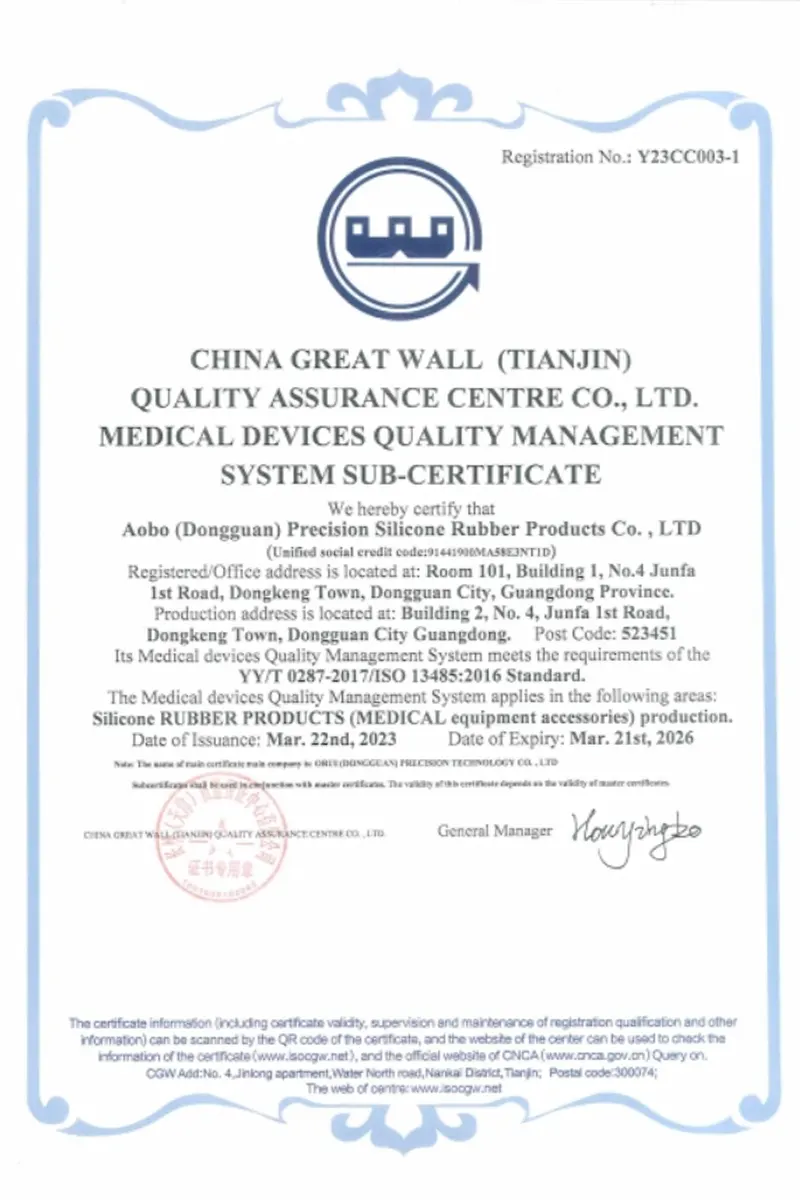
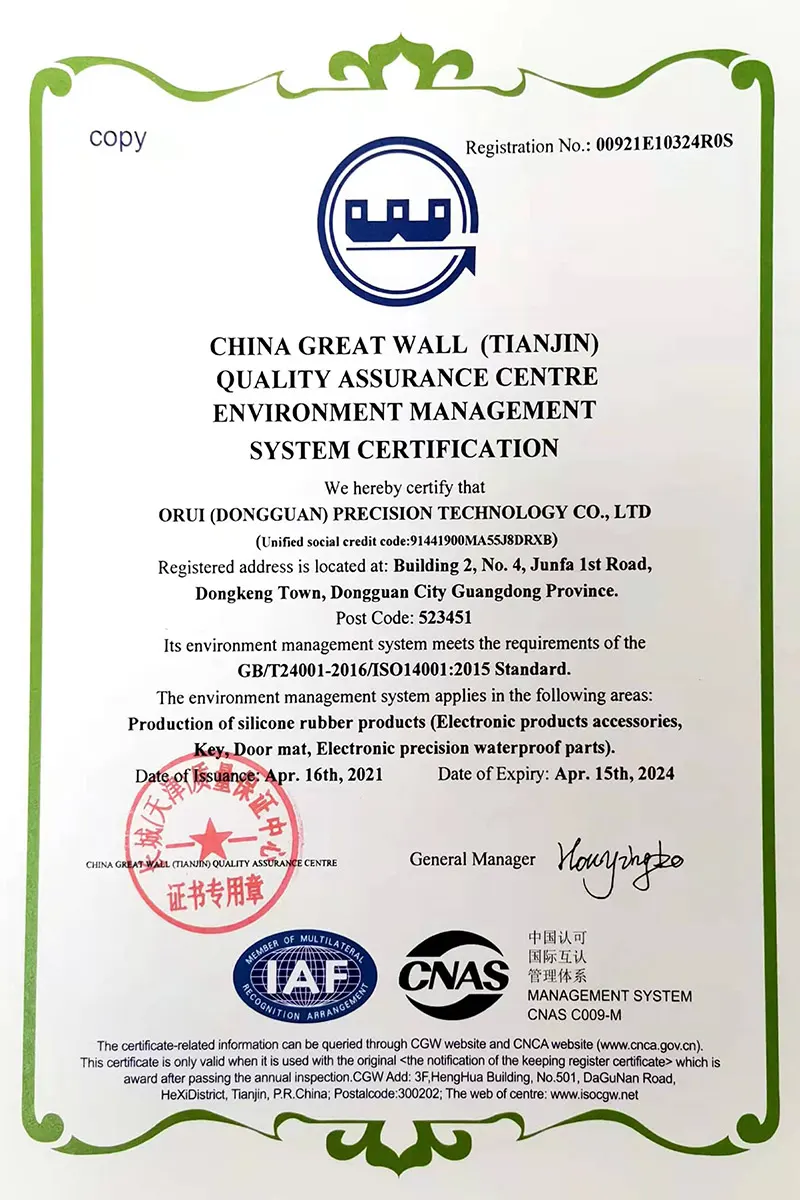
Quality Control for EMS Wearable Components
Consistency is particularly important for wearable products because dimensional variation can influence component assembly and user experience.
A typical quality-control process includes raw material inspection, first-piece approval, in-process inspection, dimensional sampling, appearance inspection, and final packaging inspection.
For custom projects, key control points may include:
Dimensional accuracy: Critical dimensions are checked against approved drawings.
Appearance: Surface contamination, bubbles, flash, deformation, color deviation, and molding defects are inspected.
Mechanical performance: Tensile, elongation, tear resistance, and deformation characteristics can be evaluated according to project requirements.
Assembly compatibility: Silicone components are checked against mating electronic and mechanical parts.
Batch consistency: Production parameters and inspection records are controlled to reduce variation between manufacturing batches.
For customers with specific quality documentation requirements, inspection standards can be incorporated into the project quality plan before mass production.
What Procurement Teams Should Confirm Before Ordering
When sourcing an EMS silicone component, purchasing teams should avoid evaluating suppliers based only on unit price.
The more important questions are whether the supplier can support the entire development cycle.
Ask the manufacturer:
1.Can they work directly from 3D files and engineering drawings?
2.Can they recommend silicone hardness based on the actual application?
3.Can they support LSR overmolding or insert molding?
4.How are critical dimensions controlled during mass production?
5.Can they provide customized colors, textures, and logos?
6.Can they support prototype sampling before mass production?
7.Can they provide material and compliance documentation?
8.Can they maintain consistent quality across repeat orders?
For OEM/ODM projects, a supplier capable of combining mold development, silicone molding, finishing, inspection, and assembly support can significantly reduce coordination between multiple vendors.
Project Experience: From Prototype to Production
A typical customer project begins with an existing EMS device concept rather than a ready-to-produce silicone design.
For example, a fitness electronics brand may initially provide a 3D model consisting of a silicone body, electrode locations, a flexible cable interface, and a control module. During DFM review, the manufacturer may identify insufficient wall thickness around the connector area and excessive stress concentration near the edge of the patch.
Instead of manufacturing the original design directly, the silicone geometry can be adjusted by reinforcing the connector region, optimizing transition areas, and modifying the mold structure. Prototype samples are then produced for assembly and fit testing.
After the customer confirms the sample, production parameters are fixed and the tool is transferred to controlled mass production. This approach reduces the risk of discovering molding or assembly problems only after large-volume production has started.
For brands planning long-term repeat orders, the benefit is not simply the first batch. The greater value is maintaining the same material specification, mold configuration, inspection criteria, and appearance standards across future production runs.
Why Choose Aobo Silicone?
Aobo Silicone focuses on customized silicone manufacturing for OEM and ODM customers. The company combines silicone material selection, mold development, LSR injection molding, overmolding, inspection, and production support within one manufacturing workflow.
For the EMS silicone abdominal muscle patch, customers can customize the material hardness, dimensions, color, logo, texture, structure, and packaging according to the final device design.
The focus is not simply on producing a silicone part, but on creating a component that works reliably within the customer's complete EMS product assembly.

FAQ
Can the silicone patch be customized to our existing EMS device?
Yes. Custom tooling can be developed according to customer-supplied 2D drawings, 3D models, samples, or functional requirements.
What silicone hardness is recommended?
There is no single hardness suitable for every EMS product. Shore A 20–80 can be considered as a general development range, with the final selection based on flexibility, skin contact, fastening structure, electrode integration, and mechanical requirements.
Can silicone be overmolded with electronic components?
It can be, depending on the component material, temperature resistance, geometry, bonding requirements, and electrical design. The assembly should be evaluated during DFM before tooling.
Can you produce samples before mass production?
Yes. Prototype samples can be developed for dimensional verification, assembly testing, appearance evaluation, and initial functional testing before mass production.
Can the silicone color match our brand color?
Yes. Custom colors can be developed according to Pantone references or customer-approved color samples, subject to material and production feasibility.
Is the product suitable for medical applications?
The component may be designed for skin-contact wellness or fitness products, but suitability for a regulated medical device depends on the complete product, intended use, applicable regulations, and required testing. Medical claims should not be inferred from the silicone material alone.
What information should we provide for a quotation?
The most useful information includes 3D/2D drawings, dimensions, target silicone hardness, estimated annual or order quantity, color requirements, electrode or insert information, surface finish, packaging requirements, and target market.
Do you support OEM and ODM production?
Yes. Aobo Silicone can support both OEM manufacturing based on customer designs and ODM development for customers requiring assistance with material, tooling, structure, and production optimization.
Hot Tags: EMS Silicone Abdominal Muscle Patch, China, Manufacturer, Supplier, Factory
Send Inquiry
Contact Info
-
Address
No. 4, Junfa 1st Road, Dongkeng Town, Dongguan City, Guangdong Province, China
-
Tel
-
E-mail
If you have any enquiry about quotation or cooperation, please feel free to email us at postmaster02@dgabgj.com or use the following inquiry form. Our sales representative will contact you within 24 hours. Thank you for your interest in our products.
Get a Precision Solution Quote in 24 Hours!
Zero-Risk Consultation: Free DFM analysis & material selection advice from our silicone engineers.
Factory-Direct Savings: Eliminate middlemen – save 15-30% vs. distributors.
Fast-Track Scaling: From prototype to 1M+ units with Tesla/BYD-certified QC.
Global Compliance Guarantee: Pre-verified for FDA/ISO/ROHS standards.