The integration of wearable technology into daily life has created unprecedented demand for components that balance functionality with user comfort. Among the most critical yet often overlooked elements is the Neck-Worn Silicone Overmolded Cable. This specialized component serves as the vital link between device electronics and the human body, demanding properties that conventional cables simply cannot provide. This exploration examines the design principles, material science, manufacturing processes, and application domains of this essential wearable component. From the unique properties of silicone elastomers to the intricacies of the overmolding process, every aspect is examined to reveal why this cable configuration has become the preferred choice for medical monitors, audio devices, communication headsets, and fitness trackers. The discussion covers ergonomic considerations, durability requirements, sterilization compatibility, and the critical role of strain relief in extending product lifespan. Through detailed analysis of material selection, design optimization, and real-world applications, this guide provides engineers, product designers, and procurement professionals with comprehensive insights into the value proposition of this innovative cable solution.
- 1. The Rise of Wearable Technology and the Need for Specialized Cables
- 2. Understanding Silicone as a Material for Wearable Applications
- 3. The Overmolding Process: From Concept to Finished Product
- 4. Ergonomic Design Principles for Neck-Worn Devices
- 5. Strain Relief and Durability: Extending Product Lifespan
- 6. Applications Across Medical, Consumer, and Industrial Sectors
- 7. Biocompatibility and Sterilization Considerations
- 8. Design Optimization and Customization Capabilities
- 9. Frequently Asked Questions
- 10. Conclusion
1. The Rise of Wearable Technology and the Need for Specialized Cables
The proliferation of wearable devices has transformed how individuals monitor health, communicate, and interact with digital content. From smartwatches and fitness trackers to medical-grade patient monitors and immersive audio headsets, these devices have become indispensable tools in both personal and professional contexts. However, the success of any wearable device depends not only on its electronic capabilities but also on the physical components that connect the user to the technology. Among these components, the Neck-Worn Silicone Overmolded Cable has emerged as a critical enabler of comfortable, reliable, and durable wearable solutions.
Traditional cables, with their rigid constructions and limited flexibility, are ill-suited for applications that require prolonged skin contact and continuous movement. The human neck is one of the most sensitive and constantly moving areas of the body, making it a challenging location for any wearable component. A cable that is too stiff can cause discomfort or skin irritation, while one that is too fragile may fail under repeated bending and flexing. The product addresses these challenges through a combination of advanced materials and precision manufacturing techniques.
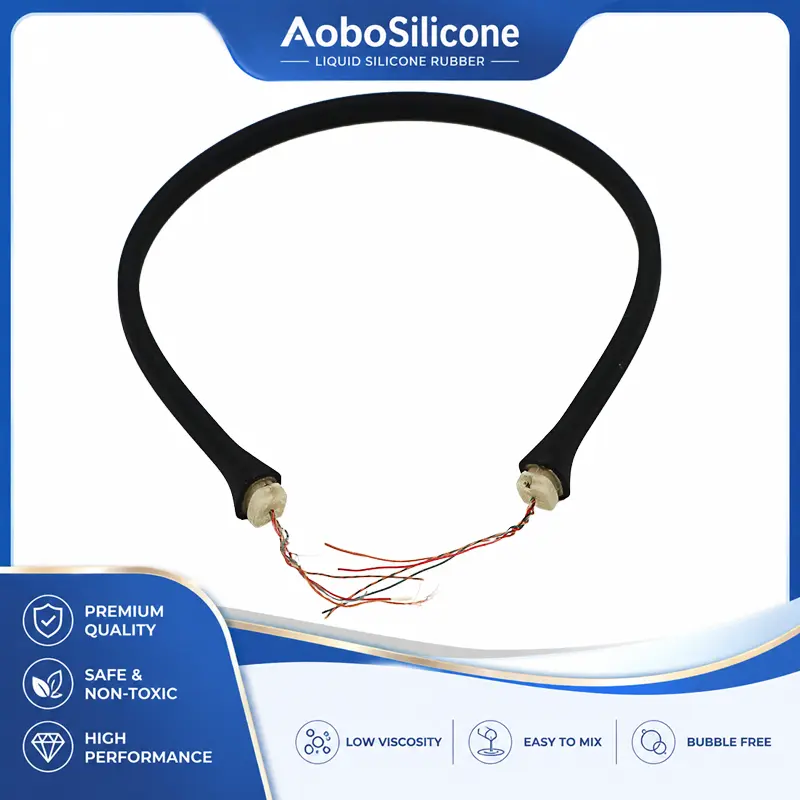
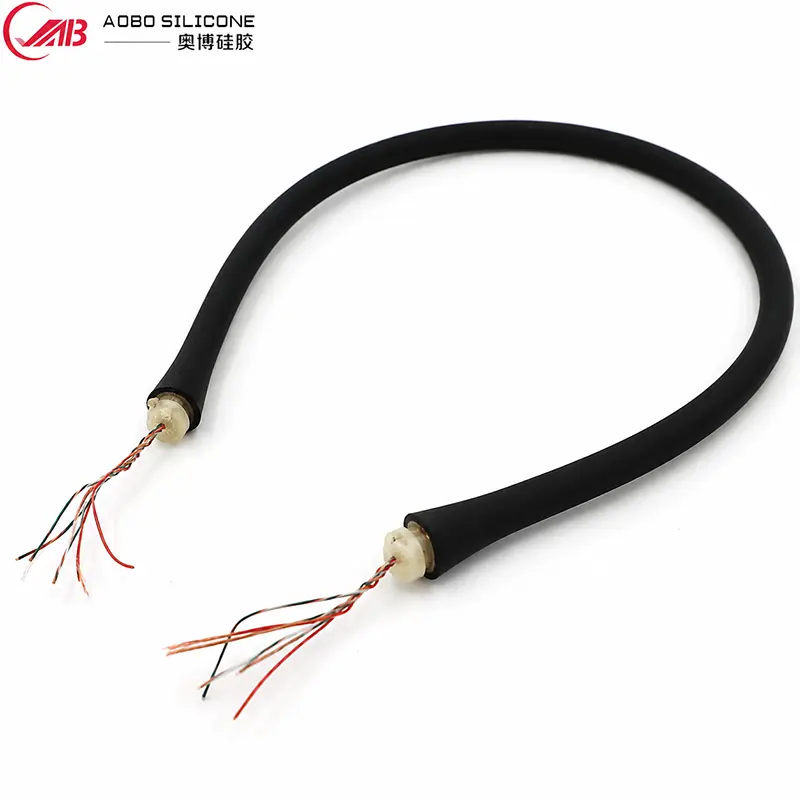
This cable configuration typically consists of a conductive core—often copper or a copper alloy—surrounded by insulation, with an outer layer of silicone applied through an overmolding process. The silicone layer provides a soft, skin-friendly surface that conforms to the contours of the neck while protecting the internal conductors from mechanical stress, moisture, and environmental contaminants. The result is a component that can withstand the demands of daily use while maintaining signal integrity and user comfort.
As wearable technology continues to evolve toward greater functionality and longer usage periods, the importance of high-quality interconnect solutions will only increase. The product represents a significant advancement in this field, offering a solution that meets the rigorous demands of modern wearable applications.
2. Understanding Silicone as a Material for Wearable Applications
The choice of silicone as the primary material for neck-worn cables is not arbitrary. Silicone elastomers possess a unique combination of properties that make them ideally suited for applications involving prolonged skin contact and continuous mechanical stress. Understanding these properties is essential for appreciating why the Neck-Worn Silicone Overmolded Cable has become the standard for high-quality wearable devices.
| Property | Description | Benefit for Wearable Applications |
|---|---|---|
| Softness and Flexibility | Silicone exhibits low durometer hardness (typically 20-80 Shore A) | Conforms to body contours without pressure points |
| Biocompatibility | ISO 10993 certified for skin contact applications | Safe for prolonged contact with sensitive skin |
| Temperature Resistance | Maintains properties from -50°C to +200°C | Suitable for sterilization and extreme environments |
| Chemical Resistance | Resists oils, solvents, and bodily fluids | Maintains integrity in medical and fitness contexts |
| Durability | High tear strength and elongation | Withstands repeated bending and stretching |
| Hydrophobicity | Repels water and moisture | Protects internal conductors from corrosion |
One of the most significant advantages of silicone is its ability to provide a soft, pleasant tactile experience. Unlike harder plastics or rubbers, silicone does not become sticky or tacky with prolonged use, a phenomenon known as the stick-slip effect. This property is particularly important for neck-worn devices, which remain in constant contact with the skin throughout the day. Users are unlikely to tolerate a device that causes irritation or discomfort, making material selection a critical factor in product acceptance.
Silicone also exhibits excellent electrical insulation properties, making it an effective barrier between conductive elements and the user. This insulation capability, combined with the material's flexibility, allows for the creation of cables that are both safe and comfortable. The material's resistance to moisture and chemicals further enhances its suitability for applications where the cable may be exposed to sweat, cleaning agents, or bodily fluids.
In addition to these performance characteristics, silicone is compatible with a wide range of manufacturing processes, including liquid injection molding (LIM) and high-consistency rubber (HCR) molding. This manufacturing flexibility enables the production of cables with complex geometries, integrated strain relief features, and customized color options, allowing designers to create components that are both functional and aesthetically pleasing.
3. The Overmolding Process: From Concept to Finished Product
The manufacturing process behind the Neck-Worn Silicone Overmolded Cable is as critical to its performance as the material itself. Overmolding is a specialized manufacturing technique in which a secondary material—in this case, silicone—is molded over a pre-formed substrate. For neck-worn cables, the substrate typically consists of the conductive core and primary insulation, which are placed into a mold cavity before the silicone is injected or compressed around them.
Substrate Preparation
The conductive core and primary insulation are precisely cut to length and terminated as required. The substrate is cleaned to remove any contaminants that could compromise adhesion between the layers.
Mold Design and Fabrication
Custom molds are designed to accommodate the specific geometry of the cable, including any strain relief features, connector interfaces, or ergonomic contours. Mold design is critical to achieving consistent wall thickness and dimensional accuracy.
Molding Process
The substrate is placed into the mold cavity, and liquid silicone rubber (LSR) or high-consistency rubber (HCR) is injected or compressed around it. The mold is heated to cure the silicone, creating a chemical and mechanical bond between the layers.
Post-Processing
After curing, the molded cable is removed from the mold and subjected to finishing operations such as flash removal, inspection, and testing. Quality control measures ensure that each cable meets the required specifications for electrical performance, dimensional accuracy, and cosmetic appearance.
The overmolding process offers several advantages over alternative manufacturing methods. Unlike simple dip coating or extrusion, overmolding allows for precise control over the geometry of the silicone layer, enabling the creation of integrated features such as strain relief ribs, gripping surfaces, and connector boots. This integration reduces the number of separate components required, simplifying assembly and improving reliability.
Another key advantage of overmolding is the strong bond it creates between the silicone and the substrate. The chemical adhesion that occurs during the molding process is far superior to what can be achieved with adhesives or mechanical fastening, reducing the risk of delamination or separation during use. This bond integrity is particularly important for cables that are subjected to repeated flexing and pulling forces.
For manufacturers of wearable devices, the overmolding process offers the ability to produce cables in a wide range of colors, textures, and hardness levels. This customization capability allows brands to differentiate their products through unique aesthetic and tactile experiences, contributing to brand identity and user satisfaction.
4. Ergonomic Design Principles for Neck-Worn Devices
The ergonomic design of a neck-worn cable is perhaps the most critical factor determining user acceptance and satisfaction. A cable that functions perfectly but causes discomfort will ultimately be rejected by users. The design of the Neck-Worn Silicone Overmolded Cable must therefore prioritize human factors alongside electrical performance and durability.
Weight Distribution
The cable should be as lightweight as possible to minimize the sensation of wearing a device around the neck. The silicone overmold contributes minimal weight while providing substantial protection and comfort. Designers should consider the total weight of the assembled device, including any attached components, to ensure that the neck-worn configuration remains comfortable for extended periods.
Surface Texture
The surface of the silicone overmold can be customized with textures that enhance grip or reduce friction against the skin. A matte finish may be preferred to minimize stickiness, while a slightly textured surface can prevent the cable from sliding or shifting during movement.
Flexibility and Memory
The cable should be flexible enough to conform to the natural contours of the neck without exerting pressure. At the same time, it should retain its shape to maintain a consistent fit. Silicone's inherent flexibility and shape memory make it ideal for this balance.
Length and Positioning
The cable length must be carefully calibrated to ensure that any attached devices—such as earphones, microphones, or sensors—are positioned optimally without being pulled taut or allowed to dangle excessively. Adjustable length features may be incorporated to accommodate different user anatomies.
Attention to these ergonomic factors significantly reduces the risk of discomfort, skin irritation, or fatigue, thereby enhancing the overall user experience. A well-designed neck-worn cable becomes virtually imperceptible during use, allowing the user to focus on the device's functionality rather than the physical sensation of wearing it.
Designers should also consider the aesthetic appeal of the cable, as the visible portion of the device contributes to the user's perception of quality and style. The silicone overmold can be manufactured in a wide range of colors and finishes, allowing for personalization and brand alignment.
5. Strain Relief and Durability: Extending Product Lifespan
The durability of a neck-worn cable is directly influenced by the effectiveness of its strain relief design. Strain relief refers to the features incorporated into the cable to absorb mechanical stress at critical points, preventing damage to the internal conductors and the connections between the cable and the device. The Neck-Worn Silicone Overmolded Cable typically incorporates several strain relief mechanisms that enhance its resistance to bending, twisting, and pulling forces.
Integrated Strain Relief Boots
At the junctions between the cable and connectors, overmolded silicone forms a gradual transition that distributes bending forces over a larger area, reducing localized stress concentration.
Reinforced Core Construction
Some designs incorporate additional strength members, such as aramid fibers or steel wire, within the cable construction to provide resistance to tensile forces without compromising flexibility.
Fillet Design
Generous radiuses at the junction between the cable and the overmold reduce stress concentration, preventing cracking or delamination during repeated flexing.
Material Resilience
Silicone's inherent resilience allows it to recover its shape after deformation, reducing the accumulation of permanent damage from repeated use.
In addition to these specific features, the overmolding process itself contributes to durability by encapsulating the substrate completely, eliminating any exposed areas where moisture or contaminants could enter. The seamless outer layer also provides a smooth, snag-resistant surface that reduces the risk of accidental damage from catching on objects during movement.
Testing protocols for neck-worn cables typically include flex testing, tensile testing, and environmental exposure testing to verify that the cable can withstand the rigors of daily use. The use of silicone overmolding has been shown to significantly improve performance in these tests, offering substantial advantages over alternative materials such as PVC or thermoplastic elastomers (TPE).
For manufacturers, the durability of the cable directly impacts product reliability and warranty costs. A cable that fails prematurely can lead to customer dissatisfaction and damage to brand reputation. Investing in high-quality silicone overmolding is therefore a prudent strategy for companies committed to delivering long-lasting wearable devices.
6. Applications Across Medical, Consumer, and Industrial Sectors
The versatility of the Neck-Worn Silicone Overmolded Cable has led to its adoption across a wide range of industries, each with unique requirements and constraints. The following table summarizes key application areas and the specific demands they place on cable design.
| Sector | Typical Devices | Critical Requirements |
|---|---|---|
| Medical | Patient monitors, pulse oximeters, ECG leads, wearable drug delivery systems | Biocompatibility, sterilization compatibility, electrical safety, signal integrity |
| Consumer Audio | Neckband headphones, gaming headsets, noise-canceling earphones | Comfort, aesthetics, durability, low friction, tangle resistance |
| Communication | Professional headset systems, intercom devices, voice assistants | Flexibility, microphone positioning, quick disconnect capability |
| Fitness & Sports | Heart rate monitors, activity trackers, sweat-resistant audio devices | Moisture resistance, sweat resistance, secure fit during movement |
| Industrial | Wearable sensors for safety monitoring, communication headsets in noisy environments | Chemical resistance, robustness, high visibility options |
In the medical sector, the cable must meet stringent regulatory requirements for skin contact and sterilization. Silicone's biocompatibility and resistance to autoclaving and chemical disinfection make it the material of choice for reusable medical devices. For consumer audio applications, the focus is on comfort and aesthetics, with the cable often serving as a visible design element that reflects the brand's identity.
Fitness and sports applications demand cables that can withstand exposure to sweat and repeated washing, while maintaining a secure fit during vigorous activity. The hydrophobic nature of silicone prevents the absorption of moisture, reducing the growth of bacteria and unpleasant odors. Industrial applications may require cables with enhanced visibility, such as high-contrast colors or reflective elements, to improve safety in low-light environments.
The ability to customize the silicone overmold for each application—through variations in durometer, texture, color, and geometry—ensures that the cable can be precisely tailored to meet the unique demands of each sector. This customization capability is a key reason why silicone overmolded cables have become the preferred solution for neck-worn devices across industries.
7. Biocompatibility and Sterilization Considerations
For medical and some consumer applications, the biocompatibility of materials in contact with the skin is of paramount importance. The Neck-Worn Silicone Overmolded Cable must be manufactured from materials that have been tested and certified for prolonged skin contact, typically in accordance with ISO 10993 standards.
Skin Sensitization and Irritation
Silicone is inherently hypoallergenic and does not contain phthalates, latex, or other common allergens. This makes it suitable for use on sensitive skin and for individuals with allergies or dermatological conditions.
Sterilization Compatibility
Silicone withstands repeated sterilization cycles using a variety of methods, including steam autoclaving, ethylene oxide (EtO) gas, gamma irradiation, and chemical disinfectants. This compatibility is critical for medical devices that require reprocessing between uses.
Low Extractables
High-quality medical-grade silicone exhibits low levels of extractable substances, minimizing the risk of leaching harmful compounds into the user's skin or into the environment during sterilization.
Durability Under Sterilization
Unlike many other elastomers, silicone retains its mechanical properties after repeated sterilization cycles, ensuring that the cable remains flexible and functional throughout its intended service life.
For non-medical applications, biocompatibility may be a lower priority, but many consumer device manufacturers still specify medical-grade silicone to ensure the highest level of user safety and to meet international regulatory requirements for skin-contact products. The use of certified materials also simplifies the regulatory approval process for devices sold in multiple jurisdictions.
It is important to note that not all silicone compounds are created equal. Manufacturers should work with suppliers who can provide full documentation of material certifications, including test reports and compliance statements. This diligence ensures that the final product meets the required safety and performance standards.
8. Design Optimization and Customization Capabilities
The adaptability of the product extends to virtually every aspect of its design, allowing manufacturers to create cables that are precisely tailored to their specific applications. The following list outlines key customization options available through the silicone overmolding process.
Durometer (Hardness)
Ranges from very soft (20 Shore A) to firm (80 Shore A). Softer durometers provide greater comfort, while firmer compounds offer enhanced durability and shape retention.
Color and Finish
Available in virtually any Pantone color, with options for matte, glossy, or textured surfaces. Custom colors enable brand differentiation and aesthetic cohesion with the device design.
Cross-Section Profile
The cable can be manufactured in round, oval, flat, or custom profiles to suit the ergonomic and routing requirements of the device.
Integrated Features
Strain relief ribs, gripping textures, cable management clips, and connector boots can be molded directly into the overmold, reducing assembly complexity.
Conductor Configuration
Multiple conductors, shielded pairs, and custom termination options can be specified to meet the electrical requirements of the application.
Length and Terminations
Cables can be produced in custom lengths with a variety of connector types, including custom-molded connectors that integrate seamlessly with the overmold.
Design optimization also involves considering the cable's intended environment. For outdoor applications, UV-resistant silicone compounds may be specified to prevent degradation from sunlight exposure. For medical devices, color options may be limited to ensure clarity of markings or to meet hospital color-coding standards.
Working closely with an experienced silicone manufacturer during the design phase can help identify potential issues early and ensure that the final product meets all performance and cost objectives. Many suppliers offer design assistance and prototype development services to accelerate the product development cycle.
9. Frequently Asked Questions
What is the typical lifespan of a Neck-Worn Silicone Overmolded Cable?
Can the cable be washed or cleaned without damaging the silicone overmold?
Is the silicone overmold safe for users with allergies?
How does the overmolding process affect the electrical properties of the cable?
Can the color of the silicone be customized to match a brand identity?
10. Conclusion
The Neck-Worn Silicone Overmolded Cable represents a convergence of material science, manufacturing precision, and ergonomic design that has fundamentally improved the performance and user experience of wearable devices. The unique properties of silicone—its softness, biocompatibility, durability, and resistance to environmental factors—make it an ideal material for applications that require prolonged skin contact and continuous movement.
Through the overmolding process, manufacturers can create cables that are not only functional but also comfortable, durable, and visually appealing. The integration of strain relief features, customized geometries, and a wide range of aesthetic options allows designers to create components that meet the specific demands of medical, consumer, and industrial applications. The ability to tailor durometer, color, texture, and other parameters ensures that the cable can be optimized for any use case.
As wearable technology continues to advance, the demand for high-quality interconnect solutions will only grow. The neck-worn cable, once considered a simple accessory, has become a critical element of device design, influencing user satisfaction, product reliability, and brand perception. By investing in silicone overmolded cables, manufacturers can differentiate their products in a competitive market while ensuring that users enjoy a comfortable and reliable experience.
For engineers, product designers, and procurement professionals, understanding the benefits and capabilities of this technology is essential for making informed decisions. The knowledge gained from this exploration provides a solid foundation for specifying, designing, and sourcing neck-worn cables that meet the highest standards of quality and performance.
Aobo Silicone — Contact us to learn how our silicone molding expertise can elevate your wearable device designs.